Friday, April 8, 2011

The Mosaic Law

This post is not about the trip we just took to Israel, rather it is part of a paper I just had to write about the Mosaic Law which the people of Israel had to live under while in the wilderness. I welcome feedback as I am still wrapping my mind around this.
                                  
                                                                  MOSAIC LAW


The Mosaic Law, to live or not to live by it is something that has caused me great confusion over the past week, for I struggle to understand how one can live in grace while ignoring the law. Now to start I must clarify my conception of the “law”. As I think of the law I consider the Ten Commandments to be the foundation of the 613 laws givens in Exodus, therefore I sum up the Mosaic Law within the Ten Commandments. This may be wrong, but at this point, this is my understanding even though I know it is a much broader landscape. My initial answer to this question of whether we need to live under the law to this day would have been yes, but as I study and begin to gain a better understanding of this concept, I will argue for the answer of no, with some concessions.
            The Mosaic Law in its entirety is the Torah, the first five books of the Bible. In these books are multiple rules and regulations that were given to the Israelite people for just about every single area of life one could think of. These laws were given to Israel in order to guide and direct them to live in accordance with the desires of God. There are basically summed up within the Ten Commandments, but for the sake of this paper and argument, we will set that aside and focus on the 613 specific laws given to Israel that encompassed three main areas; moral, social and ceremonial.
            My first argument will be that of context and audience. The Mosaic Law was written for the Israelite people and given to them during their wandering in the wilderness. It was designed to align the people with the will of God and to guide them into the Promised Land as a holy people, set apart for God; it was also, in a similar function, to guide them away from sin and further derogation and disintegration as a people. As a people not yet privy to the grace we now find under Christ, they had a different system of dealing with sin. Animal sacrifices were the primary coverings for sin or atonement for the sin committed by the people. And of course today, we don’t have to sacrifice animals and use their blood to atone for our shortcomings and sinful nature; we have Christ as the perfect and final sacrifice to cover all sin, for those who chose to accept Him. Secondly they had no formal governing system that maintained the “law” in the social sense. The moral laws were set in place to govern the actions of the people, and to give a sense of order and rebuttal to a breach in that social order. Today we have governing bodies that lay the “law of the land” that help to maintain moral and social justice and peace. Ultimately I believe that the Law was given to the people to show them their sinfulness. If God had not given them the law, how long would they have continued to go astray? How long might God have had to continue to delay their entrance to the Promised Land? The law brought the awareness of sin and therefore the understanding that sin must be atoned for.
            As I look at Grace under the totality of the sacrifice of Christ on the cross, I understand that therein lies the end of the Law in the sense of bringing my sacrifice to the alter for atonement. Atonement has been made for me in its finality. As I submit myself to the Lordship of Christ, I am under the grace of that sacrifice, and have no need for the ceremonial laws that existed for the Israelites. However; I still struggle then with the Ten Commandments that still exist and that I believe are still relevant in that they show us our sin and the need for the sacrifice of Christ. So then, as I continue this thought and revelation, now that I have been redeemed by Christ blood, I no longer live under the law insofar as it pertains to it’s statement of sin, rather I have renounced sin and my sinful nature through my acceptance of Christ’s sacrifice and now live under his grace. However, for those who have not yet accepted Christ and his redeeming blood, they still live under the law of the Ten Commandments, which is to show them their sinfulness.
            Galatians 2:20-21 says; “I have been crucified with Christ and I no longer live, but Christ lives in me. The life I now live in the body, I live by faith in the Son of God, who loved me and gave himself for me. 21 I do not set aside the grace of God, for if righteousness could be gained through the law, Christ died for nothing!” This sums up what I currently understand as it pertains to the Law. If I could gain righteousness by simply observing the Law, then what Christ did on the cross means nothing, but I know this to be a silly statement. There is nothing I can do on my own, through any list of laws, that will allow me to enter heaven. Ephesians 2:8-9 reiterates this statement, “ For it is by grace you have been saved, through faith—and this is not from yourselves, it is the gift of God— 9 not by works, so that no one can boast.”
            I understand that I cannot gain favor or entrance to heaven under my own actions of following a list of laws; I still however, believe that living according to the Ten Commandments will bring us closer to alignment of God’s desire and will for our lives. I believe these to be foundational to how we ought to live our short lives here on this earth, at the same time understanding that by following them we will not be able to earn our way to heaven, it is by the grace of God through His son Jesus Christ, that we hear, “Well done, good and faithful servant.”
References
Life application study Bible (New International Version). (2005). Wheaton, IL:             Tyndale House Publishers.

Tuesday, April 5, 2011

Sunday Day 8 & 9

     Today we visited Qumran, En Gedi, Masada, and the Salt Sea. It was a very neat day. Qumran was where the Dead Sea Scrolls were found. I was surprised to find that the cave, cave #4, was much lower to ground level than I thought it would have been. When you think of a cave, one might think of a hole in the side of a mountain face, but the Dead Sea Scrolls cave is approx. 200 feet off the ground, which back in the day it was being used, might have been much closer to ground level. It sits at the foot of the mountains of the Negev.

     From there we went on down to visit En-Gedi where we bought some sea salt and walked around enjoying the view from the lowest point on earth.


     Our journey from there led us to one of the neatest places I think I have ever visited, Masada. It was built by King Herod, but he only visited it one time during his life. Constructed as a fortress getaway, it is located on the top of a single mountain separated by gorges on each side. It is a spectacular fortress with a view to die for. We spent some time there looking at where the Romans built their camps during their attempts to over take the fortress, we also saw the siege ramp that the Romans built to break the walls of the  mighty palace. After our tour, a group of us decided to walk down the famous snake path, a very long steep and breathtaking walk down the side of Masada. Before the Romans built the Siege ramp, the snake path was the only way to the top of the mountain. I have great respect for the ambition and determination for the Romans in trying to take such a place. Although I might not agree with their reasons for wanting to take the mountain, I can admire their ability to not allow something that seemed impossible to stop them. They had a mission, and they found a way to accomplish the impossible. ALthough their ultimate goal was not accomplished, their overcoming the enormous obstacle of mounting the fortress was conquered.


     Once we left there, we traveled to the Salt Sea, otherwise known as the Dead Sea. It is the lowest place on the face of the earth at 1388 feet below sea level. It is fed by the Jordan River and has no outgoing streams. The water evaporates at a rate of 17 tons per day leaving behind huge amounts of salt. The water is 33% salt which makes for a very buoyant swim. As our guide says, when you come out of the water, you feel like a slimy whale. In my case I also looked like one....... Anyway, we had a fantastic overnight stay, floating in the Salt sea and the hotel pool.


     The next day, Monday, we traveled back up to Jerusalem where we visited the Shoah Museum, otherwise known as the Holocaust Museum, the Museum of Israel and spent time shopping in the Old City. From there we sent to eat our final supper in Israel as a group, and then on to the airport.

It was a wonderful trip, full of lifelong memories and relationships. I sit now in Atlanta International Airport in a 9 hour layover. We will soon board our final flight for Chicago and should be home by tonight. Thanks for all who prayed for our safety. We never had a time where we felt anything but safe and welcomed. If you ever get a chance to go to Israel, I would suggest you don't spend too much time thinking about it, but give yourself the freedom and opportunity to learn about a wonderful country and people.

Saturday, April 2, 2011

Day 5 - Free Day

WOW!!
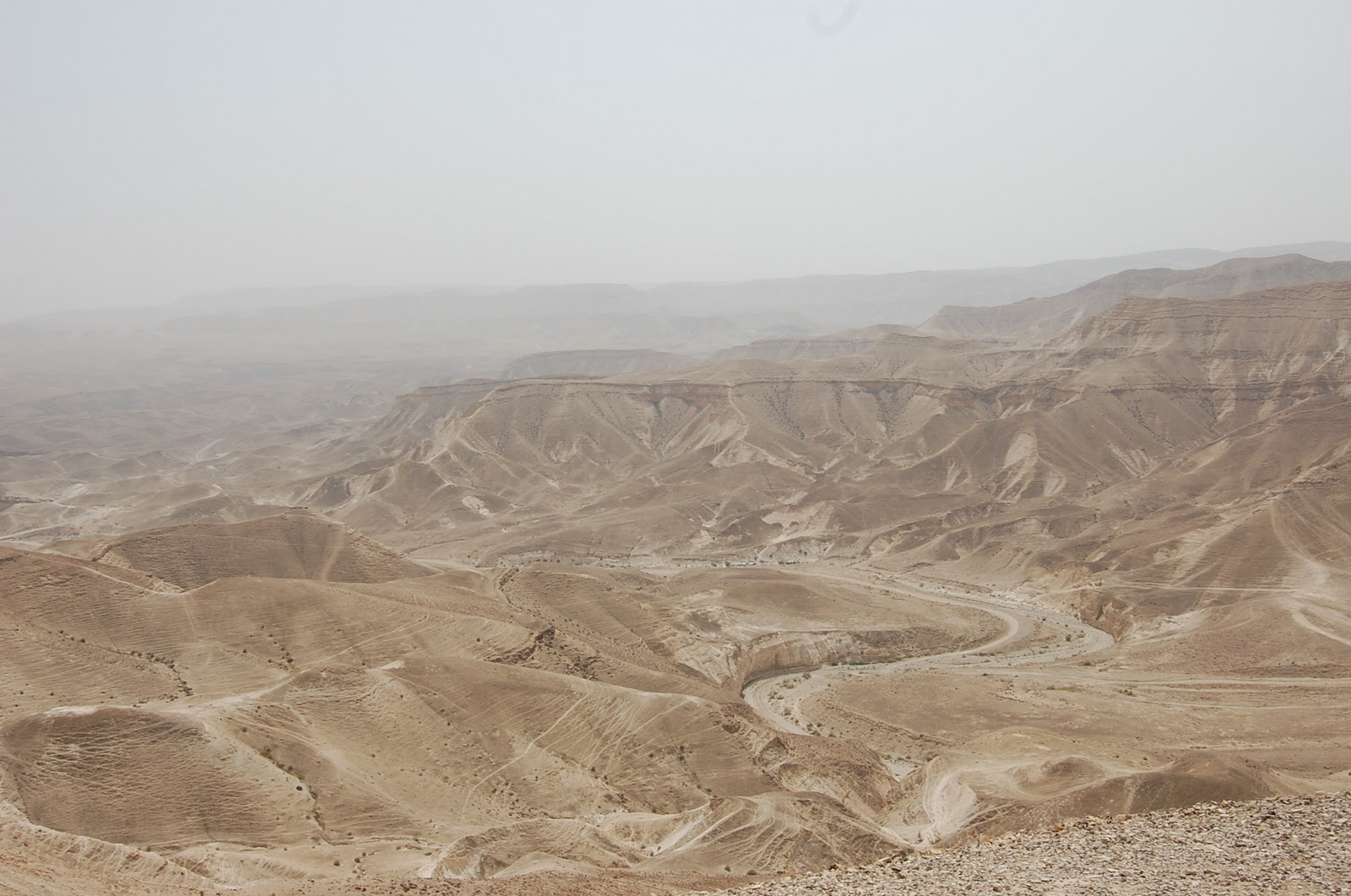
Today was our free day and I signed up to go on a trip to go out in the desert four wheeling. I never imagined the desert could be so neat. We happen to be spending time in the same desert that Jesus wandered in for 40 days. One often thinks of sand when you say desert, but this was anything but. Cliffs, rocks, mountains, wadi's, vegetation, wild life such as Ibex and Camels, scorpions, lizards.....the desert is full of life and most often times se just don't spend enough time there to see it all. I was blessed with about 6 hours of high mountain desert and it was amazing. When you get out away from civilization and all you have is nature around you, the silence is deafening.
Good day!

Tomorrow we see Masada, which is what I have been waiting for, the Salt Sea (Dead Sea) and Qumran where the Dead Sea scrolls were found. Another day in the desert...YES!!


Thursday, March 31, 2011

Day 4

Bethshan-
Today we left the Galilee region and traveled south or up to Jerusalem. We stopped at Bethshan, on of the Decapolis cities where the body of King Saul was hung ont he wall. Jason and I sung in the Theater and we explored some of the most amazing Roman ruins I could ever imagine. Bethshan is located at the cross roads of the Jordan and Herod vallies, this place is an archeological treasure. It was a Roman pagan place and became the capitol city of the Decapolis. It was destroyed January 18, 749 A.D. by an earthquake. What an amazing place to explore, one I could have spent hours and hours walking around in. The Romans really knew how to live comfortably.


Jericho, Dead Sea, Jerusalem-
From there we traveled toward Jerusalem and in doing so, we went through the Jericho area, traveled along the Jordan river by the Jordan boarder which is Palestinian occupied lands. It was a stark contrast in living styles from the Galilee area. They dont' care about the land around them, they have trash everywhere, and lots of plastic just strewn across everything. From that area we continued to travel toward the Dead Sea or Salt Sea as it is called here. We stopped for a quick lunch and a short camel ride, then headed up the mountains to Jerusalem. As we came upon the Holy City, we went through a tunnel, and as we came out the other end, the city emerged. What a spectacular site, a once in a lifetime experience to see the city that has seen generations upon generations of people.


We went inside the city walls through the Lions Gate, otherwise known as Stephens Gate and went to St Annes church. There we tested out the acoustics and sang a few songs. Jason Holliday sang verse one of Amazing Grace by himself and gave time for each line to resonate in the room. What an amazing time of singing and hearing the song ring through the church. We visited the pool of Bethesda and saw a portion of that excavation. Tomorrow we will spend the whole day inside the city in the Old City. Looking forward to seeing more.


Day Three

Capernaum - Called Jesus's home town by Matthew in 9:, this town was practically just that. Jesus taught and spent much time in this place. The white synagogue was built upon the black foundation of the original synagogue that Jesus taught in, that is to say, the remnants of the synagogue that we see today is not the same synagogue that Jesus taught in. Rather the foundation we see, the black stone, is the foundation of the synagogue of Jesus time. It was neat to know that I was standing in the same place as Christ once stood and taught. Situated close to the Sea of Galilee's coast line, it was a fishing and farming community. Only the town center has been excavated to this point.


Sea of Galilee - A wonderful time spent floating on the water. We motored out into the sea and shut the engine off, everyone was perfectly quiet and it was the most peaceful place I think I have ever been. The mountains all around, the water perfectly calm, just an amazing place. From one central point, one could see many places where Jesus had been, teaching, healing and spending time. The Bible stories start to come to life all around you.


Tabgha - This is the traditional spot where it is believed that Jesus multiplied the two fish and five loaves of bread feeding the multitudes. It was a quiet and peaceful place as a church has been built over the site, as in almost all the cases where it was believed that Jesus did a miracle. One thing about the picture below, you will see two fish, and four loaves of bread in the basket, the fifth loaf of bread is Christ himself, (artistic idea behind the mosaic.)


Chorazin (Korazin) - a synagogue also of the Jesus time period, this city is mentioned in Luke 10:13-15


Kursi (Gergesa) - Better known as the place where Jesus sent the legion of demons into the herd of swine that then rushed down the hillside into the water and drown. The synagogue that now stands was built as a memorial and dates back to the 5th century C.E. There are ruins up the hill side of an old church that is believed to have been built as a result of the man that was healed of the demons. If you recall, after he was healed, he ran to the one of the cities of the Decapolis and spread the word of what was done for him by Christ.

Jordan River - A last minute change in plans place Jason Holliday and I in the place of officiating the baptisms of 15+ people in the Jordan. It was a wonderful and humbling experience, and baptizing my wife in the Jordan was a special blessing for me.